WIN: SCOTUS Dumps Hawaii’s ‘Vampire’ Rule
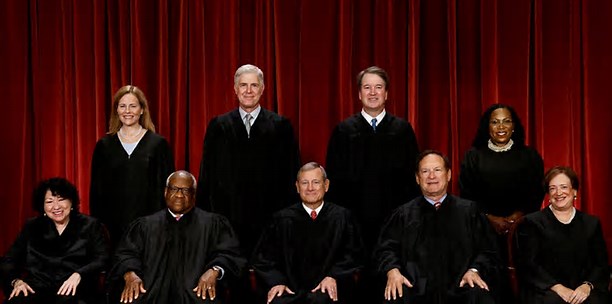
WIN: SCOTUS Dumps Hawaii’s ‘Vampire’ Rule

The U.S. Supreme Court has ruled that Hawaii’s law banning concealed carry on private property open to the public without express permission of the owner is unconstitutional.
In a 6-3 decision released on June 25, the court ruled in Wolford v. Lopez that the so-called “vampire” rule infringes on the Second Amendment rights of Hawaiian gun owners, unlike laws that allow owners of private property open to the public to post signs restricting firearms on their property. Three liberal justices—Elena Kagan, Ketanji Brown Jackson and Sonia Sotomayor—opposed the ruling.
After finding per the first Bruen criteria that the law definitely infringed on the Second Amendment rights of citizens, the court next looked at historic precedent.
“The State’s colonial and early state law analogues consist almost entirely of laws that prohibited unauthorized hunting of deer or small game on someone else’s private property,” Justice Samuel Alito wrote in the majority opinion. “These laws—including a 1721 Pennsylvania law, 1722 New Jersey statute, 1728 Maryland statute, 1763 New York law and 1771 New Jersey law—targeted unauthorized hunting and applied to land where game could be found, not retail establishments that residents frequent as part of their daily routines. Those laws had little if any impact on the Second Amendment’s central objective of protecting the fundamental right to self-defense, and their obvious aim was to prevent the distinctive harms and risks associated with unauthorized hunting.”
The majority also took exception to Hawaii’s argument that the law should be upheld because it represents “the spirit of Aloha”—a ridiculous reason to be able to infringe on an American’s constitutionally protected rights.
“The Second Amendment cannot give way to ‘the spirit of Aloha’ in Hawaii any more than it can yield to the spirit of the Big Apple (Bruen) or the Windy City (McDonald),” Alito further wrote. “Merely local attitudes can neither shrink nor inflate the meaning of fundamental Bill of Rights guarantees that apply to the States through the Fourteenth Amendment.”
In its defense of the law, Hawaii even cited a Louisiana law that was used to keep Black slaves unarmed after emancipation as a reason the “vampire” rule was constitutional. The majority didn’t buy that argument, either.
“As the Court laid out in McDonald, the right to keep and bear arms was crucially important for vulnerable blacks during this period,” Alito wrote. “This was well-understood by the Republicans in Congress who were responsible for drafting, approving, and securing the ratification of the Fourteenth Amendment. Against this history, Hawaii’s claim that this tainted artifact from Louisiana’s Black Code illuminates the original understanding of the right to keep and bear arms cannot be taken seriously.”
In her dissent, Justice Jackson, who is infamous for her criticism of the Bruen standard established back in 2022, wrote that she believes adoption of the Bruen test was a “grave mistake.”
“But to the extent the Court has embraced this test, surely it cannot shirk responsibility for adhering to Bruen’s tenets, whatever the result,” she concluded. “Today, the majority fails to faithfully apply its own jurisprudence. It alters the Bruen test and overrides Hawaii’s considered—and in my view, constitutionally sound—judgment that the property interests of its residents should be protected against unauthorized armed entry.”