Why .357 Ammo Costs are More than 9MM Let's Take a LOOK
Why .357 Ammo Cost are More than 9MM Let's Take a LOOK
Tactical K Training and Firearms
A .357 Magnum and a 9mm fire bullet differ by just two-thousandths of an inch in diameter. Yet, a box of .357 often costs up to triple the price.
The single biggest factor is economies of scale. The 9mm Luger is the global standard for militaries, police departments, and civilian self-defense. Ammunition plants run 9mm production lines continuously, churning out billions of rounds a year with highly automated, uninterrupted processes. This massive volume drives down the per-unit cost of tooling, labor, and machine setup. .357 Magnum, by contrast, is a specialized caliber primarily used in revolvers and lever-action rifles. Manufacturers produce it in smaller, intermittent batches, meaning the fixed costs of setting up and taking down the production machinery are spread over far fewer cartridges.
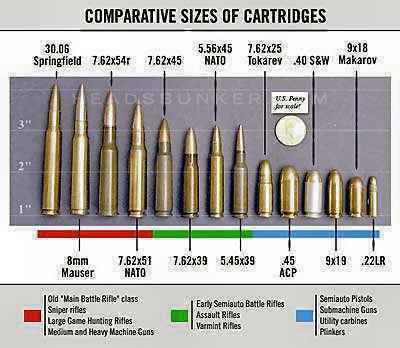
Beyond production scale, a .357 Magnum cartridge physically requires substantially more raw material to manufacture. The brass casing is longer and thicker to withstand high internal pressures, demanding up to 50% more brass by weight than a 9mm case. Standard .357 projectiles are also heavier—frequently 158 grains compared to a typical 115-grain 9mm bullet—which directly increases the amount of lead and copper required per round. Furthermore, the large .357 case requires roughly twice the powder charge to achieve its signature magnum velocities.
Product mix also influences the price tag on the shelf. A large portion of 9mm ammunition is manufactured as cheap Full Metal Jacket (FMJ) target fodder meant for high-volume practice. The .357 Magnum market leans more heavily toward premium hollow-point personal defense rounds or specialized hunting loads, which require complex projectile designs and stricter quality control. Because revolver ammunition moves off shelves slower than standard semi-automatic calibers, distributors and retailers also apply higher markups to .357 Magnum boxes to offset the cost of holding the inventory.

A visual comparison of common cartridges, featuring the .357 Magnum (third from left) and the 9mm Luger (second from right). The .357's larger size requires substantially more raw materials to manufacture. Photo by Paularized is licensed under CC BY 2.5.