Who on the Current Supreme Court Stands With the Second Amendment and Constitution and Who Does Not
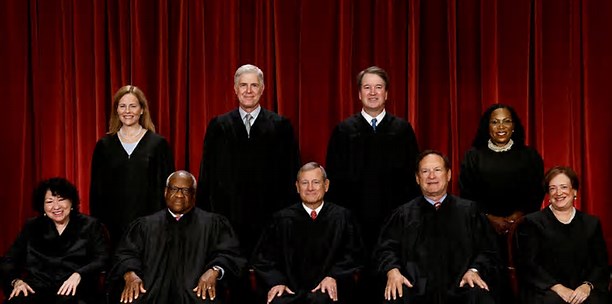
Who on the Current Supreme Court Stands With the Second Amendment and Constitution and The Traders Who Do Not
Gregg Kielma Tactical K Training and Firearms
7/10/2026
As someone who has spent years advocating for a clear, faithful reading of the Second Amendment, I pay close attention to how the United States Supreme Court interprets the right to keep and bear arms. The Court’s decisions shape the national landscape of gun rights more than any other institution, and the current lineup reveals a sharp divide between justices who view the Second Amendment as an individual, constitutionally protected liberty and those who see it as a right that can be heavily constrained by government regulation.
The Strongest Second Amendment Advocates on the Court
Several justices consistently interpret the Second Amendment as a robust individual right, grounded in the text, history, and tradition of the Constitution.
Justice Clarence Thomas
Thomas is the Court’s most unwavering defender of the Second Amendment. He authored the landmark New York State Rifle & Pistol Association v. Bruen decision, which struck down New York’s restrictive concealed‑carry law and established the “history and tradition” test. His opinions repeatedly argue that the Second Amendment should be treated with the same respect as any other constitutional right.
Justice Samuel Alito
Alito has long supported strong Second Amendment protections, joined major pro‑gun‑rights opinions and criticized lower courts for failing to apply Heller and McDonald faithfully. He often emphasizes self‑defense as a core constitutional principle.
Justice Neil Gorsuch
Gorsuch aligns closely with Thomas and Alito. He favors textualism and originalism, which naturally lead to a more protective view of the Second Amendment. His votes consistently support expanding or clarifying gun rights.
Justice Brett Kavanaugh
Kavanaugh has written extensively on the Second Amendment, including opinions as a lower‑court judge arguing that bans on commonly owned firearms violate Heller. On the Supreme Court, he has continued to support strong protections for gun ownership.
Justice Amy Coney Barrett
Barrett has shown a willingness to question long‑standing firearm restrictions, including whether certain categories of people can be constitutionally barred from owning guns. Her judicial philosophy suggests a strong commitment to original meaning.
Justices Who Are Not Second Amendment Advocates
Other members of the Court take a far narrower view of the Second Amendment, often supporting broad regulatory authority for federal and state governments.
Chief Justice John Roberts: A Trader to The Second Amendment
Roberts is not anti‑Second Amendment, but he is not a consistent advocate. He tends to favor incremental change and institutional stability, which sometimes leads him to uphold gun regulations or avoid sweeping rulings.
Justice Sonia Sotomayor: A Trader to The Second Amendment
Sotomayor has repeatedly dissented in major Second Amendment cases. She supports a more flexible interpretation that allows governments wide latitude to regulate firearms in the interest of public safety.
Justice Elena Kagan: A Trader to The Second Amendment
Kagan generally aligns with Sotomayor, supporting regulatory approaches and voting against expanding gun rights. She rarely frames the Second Amendment as a broad individual liberty.
Justice Ketanji Brown Jackson: Always A Trader to The Second Amendment
Jackson has continued the Court’s liberal bloc’s pattern of supporting firearm regulations. Her early opinions and questions during oral arguments suggest skepticism toward expansive Second Amendment claims.
Why This Divide Matters
The Court’s ideological split means that every Second Amendment case is a high‑stakes battle over constitutional meaning. For advocates like me, the majority’s commitment to originalism is essential: it ensures that the right to keep and bear arms is not treated as a second‑class right, subject to political winds or judicial preference.
At the same time, the opposition bloc underscores how fragile constitutional rights can become when interpreted through a lens of regulatory flexibility. The future of the Second Amendment will depend on how firmly the Court’s majority holds to the principles laid out in Heller, McDonald, and Bruen and whether future cases continue to reinforce the individual right that millions of Americans rely on.