What Can Happen id Democrats Take Control of The House and Senate? My Thoughtd.
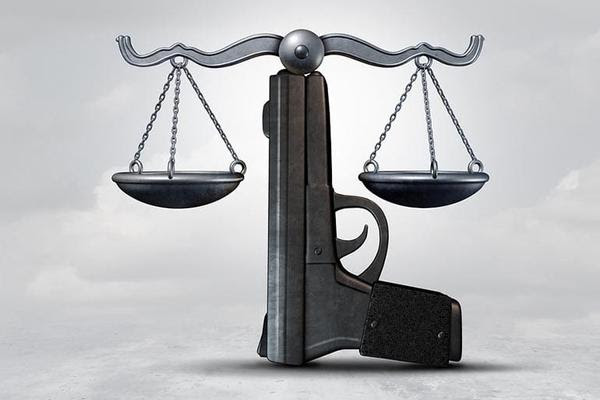
The short answer is that Democratic control of both chambers could make federal gun-control legislation more likely, but it would not automatically change gun ownership or firearm purchasing laws. Any major change would still have to make it through the legislative process, become law, and survive constitutional challenges.
Here’s my thoughts on how I would look at it from the standpoint of a gun owner, firearms instructor, and gunsmith:
What could realistically be proposed?
Recent Democratic gun-policy priorities have included universal background checks, an assault-weapons ban, restrictions on so-called high-capacity magazines, safe-storage requirements, a national red-flag law, and changes to legal protections for the firearms industry. The 2024 Democratic platform specifically identified these policies. [guns.com], [thereload.com]
This isn't just theoretical. In the current 119th Congress, Democratic lawmakers introduced the Assault Weapons Ban of 2025 in both the Senate and House. The Senate version is S.1531 and the House version is H.R.3115. [congress.gov], [congress.gov]
Of particular interest to existing gun owners, the Senate proposal would permit continued possession of covered firearms that qualify for grandfathering, while imposing restrictions on their subsequent transfer. It would also allow continued possession of grandfathered large-capacity magazines while prohibiting their sale or transfer. [govtrack.us]
Would Democrats controlling Congress mean they could simply ban guns?
My thought, no.
Controlling the House and Senate makes legislation easier to advance, but congressional control by itself does not guarantee passage. The exact Senate numbers matter significantly, as does the position of the president and the Senate's legislative procedures.
There is also a major constitutional factor that wasn't present during some earlier gun-control debates: modern Second Amendment jurisprudence.
Under Bruen, when conduct falls within the Second Amendment's plain text, the government must demonstrate that its regulation is consistent with the nation's historical tradition of firearm regulation. The Supreme Court subsequently applied that framework in Rahimi. [law.cornell.edu]
The Supreme Court's Second Amendment decisions continued to develop in 2026, including rulings that further protected Second Amendment rights in particular contexts. [usnews.com]
That means even if Congress enacted substantial new restrictions, the story wouldn't necessarily end when the president signed the legislation. Constitutional litigation would be highly likely for major restrictions affecting commonly owned firearms, magazines, carrying, or possession.
My bottom line
If Democrats controlled both chambers of Congress, I would expect considerably more legislative pressure for additional federal gun restrictions because the party has publicly supported several such measures and Democratic lawmakers have already introduced legislation along those lines. [thereload.com], [congress.gov]
But I would not tell gun owners that Democratic control of Congress means they're suddenly going to lose their firearms. That's too simplistic.
There is an enormous difference between introducing a bill, passing both chambers, having it signed into law, and having that law ultimately survive Second Amendment litigation.
For those of us who own firearms, train people to use them responsibly, or work in the firearms business, that's the distinction worth paying attention to.
Gregg Kielma