Massachusetts : Will They Ever Learn?
Armed Citizen and State Trooper Stop Cambridge Attack — In One of the Most Anti-Gun States in America
A recent incident in which an armed citizen helped stop an attack on motorists in one of the most gun-restrictive states in the country underscores a hard truth: restrictive gun laws and a revolving-door justice system don’t make people safer.
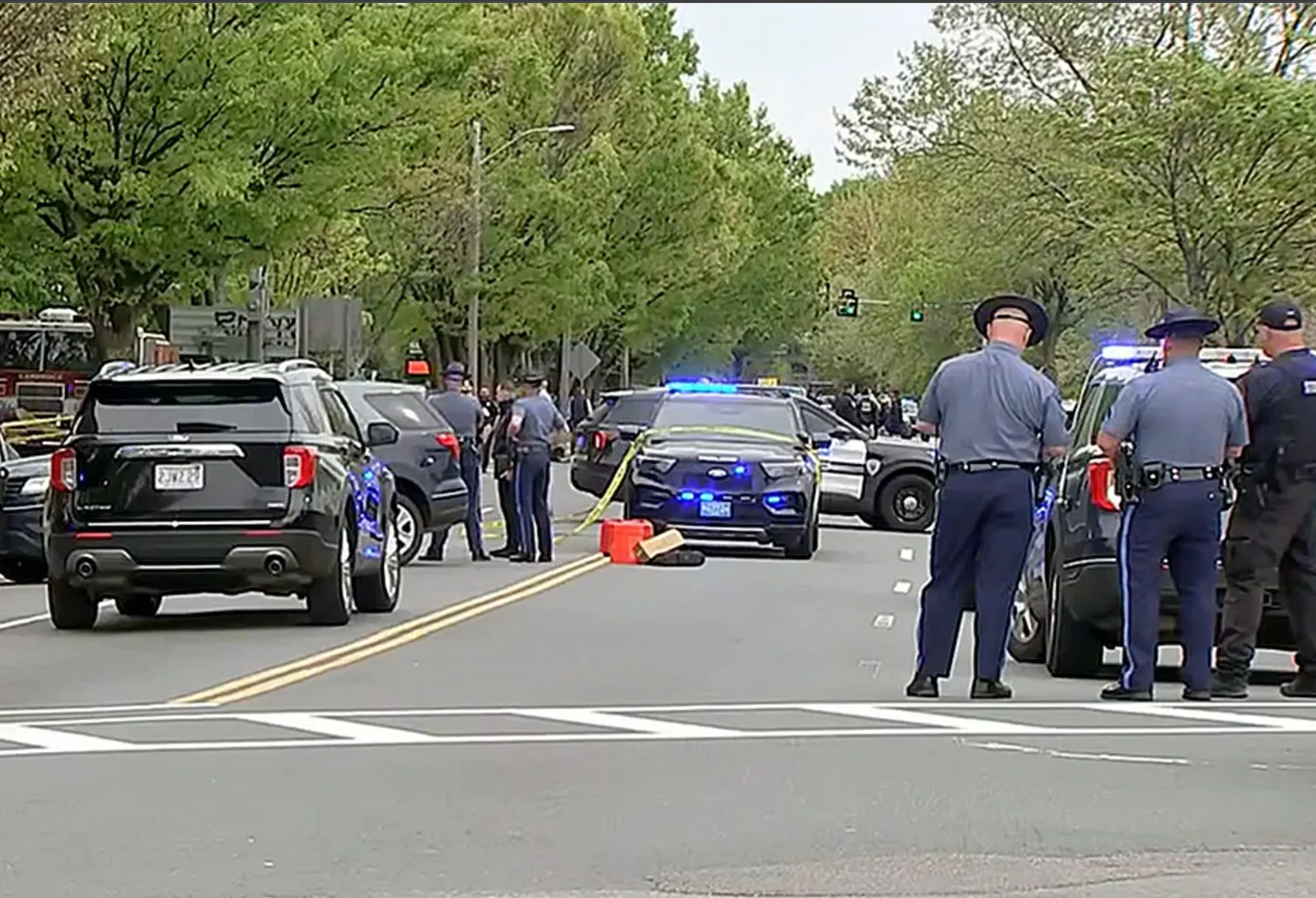
On May 11, a man armed with a semi-automatic rifle opened fire on motorists along a crowded street in Cambridge, Massachusetts. An armed citizen, who was also a Marine veteran, drew his firearm and — alongside a Massachusetts state trooper — engaged and stopped the attacker.
Cambridge police officials said the suspect created “an extraordinarily dangerous situation” during a busy afternoon, when civilians were driving, walking, biking, and rowing on the Charles River. The shooter fired 50 to 60 rounds during the attack before being struck by return fire multiple times. He was treated at the scene before being transported to a hospital.
“This incident lasted minutes thanks to the actions of the trooper and that civilian,” Middlesex County District Attorney Marian Ryan said.
The suspect’s history
The man who opened fire on Memorial Drive that afternoon was not an unknown quantity to the Massachusetts criminal justice system.
He had previously been imprisoned for shooting at Boston police officers in May 2020. He was serving three years of probation following his release from state prison last year. Before that 2020 incident, he had served time for a 2014 conviction for assault and battery with a dangerous weapon. The 2020 shooting at officers occurred just five months after his release on that 2014 conviction.
The pattern: violent crime, brief incarceration, release, more violent crime, brief incarceration, release. The May 11 attack on motorists was, on the available record, the third major violent incident in this individual’s documented history.
The 2021 sentencing
Per a recording obtained by NBC 10 Boston, prosecutors at the suspect’s 2021 sentencing for the 2020 shooting at police officers recommended 10 to 12 years behind bars. Judge Janet Sanders imposed a substantially shorter sentence.
Her reasoning, as recorded by NBC 10:
“I do realize that I’m taking a chance on you. When people stand up, experienced police officers and probation officers, and they tell me, ‘This guy is a danger to the community,’ I hear that, and it gives me… you know, I can’t look into a crystal ball and figure out what’s going to happen once you get out. But I do understand that I’m taking a risk here. And I just pray that my intuitions are right and that you have the ability, the smarts, the will, the support not to go out there and endanger other people’s lives as you have in the past.”
The judge also reportedly drew a distinction between the seriousness of “shooting at a police officer” and “shooting a police officer,” noting that no one had been injured in the 2020 incident.
The risk Judge Sanders described herself as taking did not pay off. The man she chose to release back into the community five years early opened fire on civilians on a crowded Cambridge street on May 11, 2026.
The NRA-ILA’s response
The National Rifle Association’s Institute for Legislative Action highlighted the case as an example of what they describe as the gap between Massachusetts’s restrictive gun laws and its criminal justice system’s actual capacity to protect the public.
“Gun rights supporters are right to celebrate the heroic actions of the armed citizen who helped police take down the suspect,” NRA-ILA wrote in a piece on the incident. “But law-abiding gun owners should also be appalled at how a state that tramples on their rights allowed this to take place at all.”
The organization’s broader argument: Massachusetts has built one of the strictest legal frameworks for lawful firearm ownership in the country, but its sentencing practices for violent repeat offenders fall well short of what would be needed to prevent incidents like the one on May 11. The state’s regulatory burden falls almost entirely on law-abiding gun owners, while the violent offenders the laws are nominally aimed at receive sentences that return them to the street.
“Thus, another police officer, and an armed citizen, were forced to temporarily incapacitate this dangerous individual where the state’s criminal justice system proved unwilling to do so,” NRA-ILA concluded.
Massachusetts Laws
Massachusetts has among the most restrictive firearm laws in the United States. The state requires a Firearm Identification card or License to Carry to possess any firearm, with extensive background checks, training requirements, and chief of police discretion in licensing decisions. Carry permits, while now issuable post-Bruen, remain difficult to obtain in many jurisdictions. The state bans most semiautomatic rifles by feature and restricts magazine capacity to 10 rounds.
The Cambridge incident raises an uncomfortable question for that regulatory framework: when the state’s legal infrastructure makes it extraordinarily difficult for law-abiding citizens to be armed, and when its sentencing practices return violent felons to the street after brief incarcerations, what is the legal structure actually accomplishing?
The armed citizen who helped end the May 11 attack was, by all available reporting, a Marine veteran legally carrying a firearm at the time of the incident. His presence in that location, with that firearm, with the willingness and capability to use it appropriately, was the variable that turned a potential mass casualty event into a brief incident that “lasted minutes.”
Whether Massachusetts policymakers will draw any lessons from that fact remains to be seen.