Marijuana and Gun Right: What the Hemani Ruling Means Let's Take a LOOK
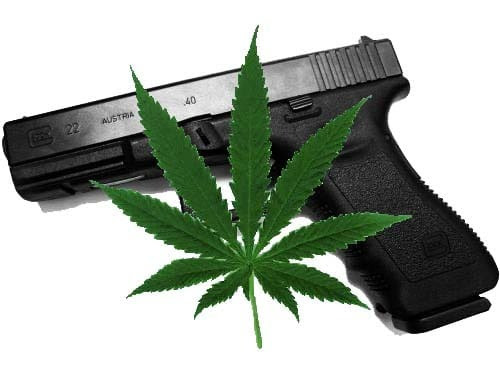
Marijuana and Gun Rights: What the Hemani Ruling Means — and Why Everyone Needs to Understand
By Gregg Kielma
06/26/26
The Supreme Court’s unanimous decision in United States v. Hemani is one of the most important gun‑rights rulings in years and one that every gun owner, cannabis user, instructor, and responsible citizen needs to understand. For the first time, the Court made it clear that casual marijuana use alone is not enough to strip someone of their Second Amendment rights.
This ruling doesn’t just affect one man in Texas. It affects millions of Americans living in states where marijuana is legal, medically prescribed, or culturally normalized yet still considered a controlled substance under federal law. And it exposes a major gap between state legalization and federal firearms regulations that has put ordinary, law‑abiding people at risk for years.
What Happened in the Hemani Case
In 2022, federal agents searched the home of Ali Danial Hemani, a Texas resident. They found a lawfully owned Glock pistol, about 60 grams of marijuana, and a small amount of cocaine. Hemani cooperated fully and admitted he used marijuana every other day. Importantly, he was not accused of being intoxicated while handling a firearm, nor of misusing the gun in any way.
Six months later, the federal government charged him under 18 U.S.C. §922(g)(3) the law that makes it a felony for an “unlawful user” of a controlled substance to possess a firearm. This law has long been used to prosecute marijuana users, even in states where cannabis is legal.
Both the District Court and the Fifth Circuit dismissed the charge, and the Supreme Court agreed: the government failed to show that disarming all marijuana users fits within America’s historical tradition of firearm regulation, as required under the 2022 Bruen standard.
The ruling was 9–0 a rare level of agreement on a Second Amendment issue.
What the Supreme Court Actually Said
The Court did not strike down §922(g)(3) entirely. Instead, it ruled that the law cannot be applied automatically to every marijuana user without proof of danger, impairment, or misuse.
Justice Gorsuch emphasized that:
The government cannot assume all cannabis users are dangerous.
Historical “habitual drunkard” laws required evidence of incapacitation not mere use.
Simply using marijuana a few times, a week does not justify losing a constitutional right.
This is a narrow but powerful ruling. It protects casual users but leaves room for restrictions on people who are intoxicated while armed, addicted, or demonstrably dangerous.
Why This Matters for Gun Owners Across America
1. Millions of lawful citizens were at risk
Before this ruling, anyone who used marijuana even legally under state law could face up to 15 years in federal prison for possessing a firearm.
That included:
Medical marijuana patients
Recreational users in legal states
People who occasionally used a friend’s prescription medication
Veterans using cannabis for pain or PTSD
The Hemani ruling makes clear that drug‑use status alone is not enough to take away gun rights.
2. It exposes the conflict between state and federal law
Marijuana remains a Schedule I controlled substance at the federal level, even though many states have legalized it.
This ruling highlights the tension between:
State‑legal cannabis use
Federal firearm prohibitions
Constitutional protections
Until Congress updates federal law, this conflict will continue but Hemani gives gun owners stronger constitutional footing.
3. It sets a precedent for future cases
Legal experts believe this ruling could influence cases involving:
Psilocybin
Ketamine therapy
Other substances being legalized at the state level
Colorado attorneys have already noted that the decision prevents the government from making categorical assumptions of dangerousness without due process.
Why Everyone Needs to Understand This Ruling
As a firearms instructor and advocate for responsible gun ownership, I believe this ruling matters because:
• Rights should not be stripped without evidence of danger.
The government tried to argue that any marijuana user is automatically too risky to own a gun. The Court rejected that logic — unanimously.
• Many Americans unknowingly lived under a legal trap.
People who followed state law could still be charged federally. Hemani exposes how unfair and inconsistent that system has been.
• Education is critical for staying compliant and safe.
Gun owners need to understand what the ruling does — and does not — protect. The law is still on the books. The ruling simply limits how it can be applied.
• This is a step toward aligning modern realities with constitutional rights.
As cannabis becomes more accepted, the law must evolve. Hemani is a major step in that direction.
The Bottom Line
The Hemani ruling is a historic win for both gun rights and civil liberties. It confirms that casual marijuana use does not erase your Second Amendment rights, and it forces the government to justify any attempt to restrict those rights with real evidence — not assumptions.
But it’s also a reminder:
Gun owners must stay informed, stay responsible, and stay within the law.
This ruling protects rights — but it doesn’t eliminate all risks.