60 Million AR-15s Land on the Supreme Court’s Desk
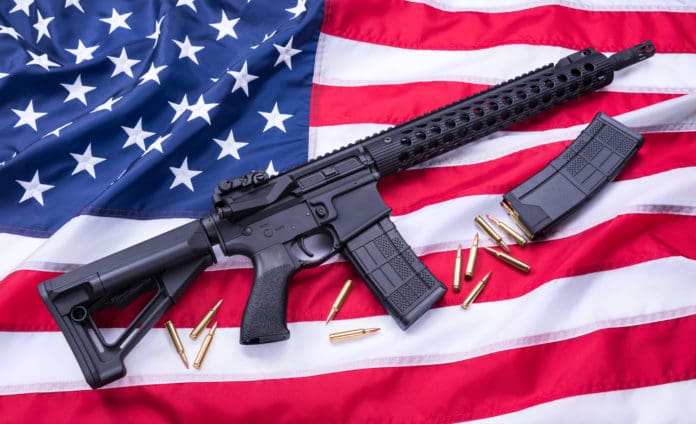
60 Million AR-15s Land on the Supreme Court’s Desk
TTAG News ContributorSeptember 1, 2026

A new national firearms survey estimating that roughly 26 million Americans own AR-15-type or similarly styled semi-automatic rifles has already become live evidence in the Supreme Court case that will decide whether state and local governments can keep banning the most popular rifle in America.
This survey didn’t sit on a shelf gathering academic dust. Attorneys challenging the Cook County, Illinois, and Connecticut rifle bans leaned on the findings repeatedly in their newly filed Supreme Court brief. That brief was filed on behalf of individual gun owners, the Firearms Policy Coalition, the Second Amendment Foundation, and the Connecticut Citizens Defense League.
The Question Before the Court
The consolidated cases, Viramontes v. Cook County and Grant v. Higgins, ask one blunt question: “Whether the Second and Fourteenth Amendments guarantee the right to possess AR-15 platform and similar semiautomatic rifles.”
The Court granted both cases on June 30, 2026, consolidated them for briefing and oral argument, and set aside one hour for argument. No argument date has been posted on the docket yet.
What the Numbers Say
William English’s 2026 National Firearms Survey gives the justices fresh data. According to English, the survey polled 51,398 American adults and identified 16,688 validated gun owners. Unlike the 2021 version, the new questions asked specifically about firearms respondents personally and currently owned — not guns owned by a spouse or something they had years ago.
The survey also split AR-15-type rifles from other similarly styled semi-autos. English’s findings show 25% of gun owners currently own an AR-15-type rifle, 12.9% own a similarly styled semi-auto with a pistol grip, and 7.9% own rifles in both categories.
Put together, 30% of American gun owners — roughly 26.4 million adults — currently own at least one rifle commonly targeted by so-called “assault weapon” bans. About 22.1 million own an AR-15-type rifle specifically, per the survey.
English estimates Americans possess around 40 million AR-15-type rifles and another 20 million similarly styled semi-autos. That’s roughly 60 million rifles.
Why does that matter? The petitioners’ case rests heavily on District of Columbia v. Heller and its holding that arms “in common use” for lawful purposes cannot be banned. As the brief frames it, whatever fuzziness exists at the edges of “common use,” there is no serious argument that 26 million owners and roughly 60 million rifles fall outside it.
Owned for Defense
The survey also asked why Americans own these rifles. According to English’s data, among owners of AR-15-type and similarly styled rifles, 77.7% cited home defense, 65.1% recreational target shooting, 50.2% hunting, 41.1% defense outside the home, 33.8% protection against animal attacks, and 25.9% competitive shooting.
Combine home defense and defense outside the home and 83% of owners cited a defensive purpose. The petitioners use that 83% figure to knock down the claim that these rifles aren’t commonly possessed for self-defense. The brief also notes that 16.4% of the defensive gun uses documented by English involved rifles.
Heller Already Set the Rule
The petitioners argue the Court needs no new test — just a faithful application of Heller.
AR-15s are unquestionably “arms,” bearable firearms used for offense and defense. The Seventh Circuit upheld Cook County’s ban after deciding plaintiffs hadn’t sufficiently shown the banned rifles were protected “arms.” The brief argues that court smuggled historical limits into the plain-text stage, where all firearms fall within the ordinary meaning of “arms.”
The Second Circuit assumed the Connecticut rifles were commonly possessed, then declared common use wasn’t enough because judges could still deem them “unusually dangerous.” The petitioners counter that Heller’s phrase is conjunctive: an arm must be both dangerous and unusual to lose protection. A rifle owned by tens of millions for lawful purposes cannot be both.